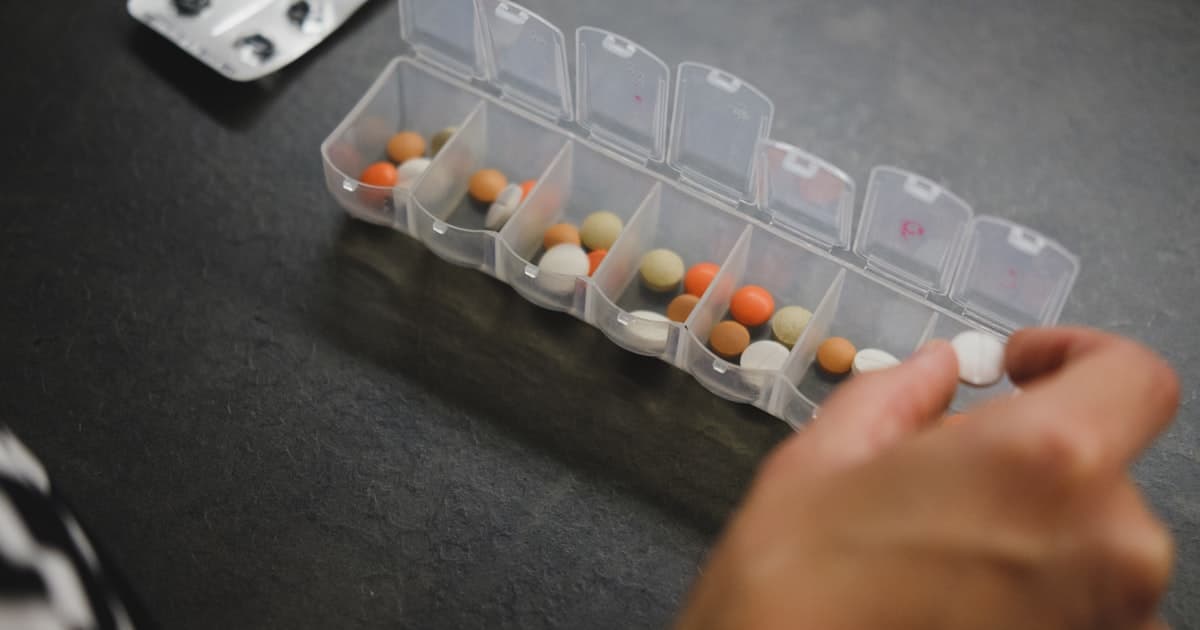
Coverage depends on your plan type, your diagnosis, and your employer's willingness to foot the bill. About 24 million Americans lost GLP-1 coverage between 2025 and 2026 as employers and insurers pulled back. But Medicare added a new $50/month pathway in July 2026, and manufacturer savings cards can cut costs to $25/month for some commercial patients.
Here is where things stand right now, by plan type, with real dollar figures.
TL;DR
- Medicare: New GLP-1 Bridge program covers Wegovy and Zepbound KwikPen at $50/month (July 2026 through December 2027). Strict eligibility rules apply.
- Medicaid: Only 11 states cover GLP-1s for weight loss, down from 16 states in October 2025.
- Employer plans: Between 19% and 67% of large employers cover GLP-1s (depending on which survey you trust). Starbucks is dropping coverage in October 2026.
- Marketplace/ACA: Almost none. Only 26 of roughly 300 carriers nationwide cover GLP-1s for obesity.
- Self-pay: $149-$499/month through manufacturer direct programs. Savings cards can drop commercial copays to $25/month.
How we gathered this data
We pulled coverage data from CMS official program documents, KFF's payer coverage research, state Medicaid formulary filings, the Mercer and Business Group on Health employer surveys (both 2025/2026 cycles), and manufacturer savings program terms as of August 2026. Medicaid state counts reflect The RX Index's tracker, verified against state pharmacy bulletins through July 10, 2026.
Medicare coverage: the GLP-1 Bridge program
Medicare Part D still does not cover GLP-1 drugs prescribed solely for weight loss. That has not changed. CMS proposed expanding Part D coverage for 2026 but never finalized the rule.
What did change: the Medicare GLP-1 Bridge demonstration, which launched July 1, 2026.
How the Bridge works
| Detail | What it means |
|---|---|
| Cost | $50/month flat copay |
| Duration | July 1, 2026 through December 31, 2027 |
| Covered drugs | Wegovy (injection or tablet), Zepbound KwikPen, Foundayo (tablet) |
| NOT covered | Single-dose vials, pens other than KwikPen |
| Age | 18+ |
| Legal basis | Social Security Amendments of 1967, Section 402(a)(1)(A) |
The $50 copay sits outside the normal Part D benefit structure. It does not count toward your deductible or true out-of-pocket spending (TrOOP).
Who qualifies for the Bridge
You need a BMI of 35 or higher. Or a BMI of 30+ with one of these conditions:
- Heart failure with preserved ejection fraction (HFpEF)
- Uncontrolled hypertension
- Chronic kidney disease stage 3a or higher
Or a BMI of 27+ with:
- Prediabetes
- Prior heart attack or stroke
- Peripheral artery disease
Who does NOT qualify
This matters. You are ineligible if you:
- Already receive a GLP-1 through standard Part D
- Have a type 2 diabetes diagnosis
- Have moderate-to-severe sleep apnea
- Have fatty liver disease (MASLD/NASH)
That last exclusion surprises people. Many GLP-1 candidates also have fatty liver disease, which means the Bridge program locks them out despite being overweight.
Data point: Medicare Part D spending on GLP-1s jumped from $5.7 billion in 2022 to $27.5 billion in 2024, per KFF. That cost explosion is exactly why CMS built the Bridge as a separate, capped pathway instead of opening the full Part D benefit.
Employer plan coverage: a shrinking window
Your employer's health plan is still the most common way Americans access GLP-1s for weight loss. But the coverage picture is fracturing fast.
The survey confusion (explained)
Every major HR survey reports a different employer coverage number. Here is why, and what each actually measured:
| Survey (year) | Coverage % | Sample |
|---|---|---|
| KFF (2025) | 19% | Firms with 200+ workers |
| KFF (2025) | 43% | Firms with 5,000+ workers |
| SHRM (2026) | 15% | Broad employer sample, weight-management only |
| IFEBP (2025) | 36% | Diabetes + weight loss combined |
| Mercer (2025) | 49% | Employers with 500+ employees |
| Mercer (2025) | 66% | Employers with 20,000+ employees |
| Business Group on Health (2026) | 67% | Large employers, weight management |
The spread from 15% to 67% comes down to how you define "large employer" and whether you count diabetes-only coverage. If your company has fewer than 500 employees, your odds of getting GLP-1 coverage for weight loss drop below 20%.
Named employers dropping coverage
GoodRx research found that roughly 12 million Americans were on plans that dropped Zepbound coverage from 2025 to 2026. Another 12 million lost Wegovy access the same way.
Here are specific, confirmed changes:
| Employer/Plan | Action | Effective |
|---|---|---|
| Starbucks | Ending weight-loss GLP-1 coverage | October 2026 |
| Cigna (own employees) | Dropped | July 2026 |
| HCA Healthcare | Dropped (cited 90% cost increase) | January 2026 |
| North Carolina State Health Plan | Dropped (cited $170M+ cost) | April 2024 |
| Ohio State University | Dropped | January 2026 |
| State of Ohio | Dropped | July 2025 |
| BCBS Massachusetts | Restricted to groups of 100+ | January 2026 |
| BCBS Michigan | Dropped | January 2025 |
| OhioHealth | Dropped | January 2025 |
Bank of America went the other direction. CEO Brian Moynihan told CNBC the company spends roughly $250 million per year on GLP-1 benefits out of a $2 billion total healthcare budget, and considers it a long-term investment.
The Business Group on Health's 2026 survey found that only 72% of large employers currently covering GLP-1s plan to continue in 2027. Ten percent confirmed they will drop coverage.
Medicaid: 11 states and shrinking
Federal law (42 U.S.C. 1396r-8(d)(2)) lets states exclude drugs used for "weight loss or weight gain" from Medicaid formularies. Most states use that option.
States that cover GLP-1s for weight loss (as of July 2026)
| State | Notes |
|---|---|
| Delaware | |
| Kansas | |
| Michigan | BMI 40+ only |
| Minnesota | |
| Mississippi | |
| Missouri | |
| North Carolina | |
| Rhode Island | Ending October 1, 2026 |
| Tennessee | |
| Virginia | |
| Wisconsin |
That is 11 states, down from 16 in October 2025.
States that dropped coverage recently
| State | Dropped | Reason |
|---|---|---|
| California (Medi-Cal) | January 2026 | Budget constraints |
| New Hampshire | January 2026 | Cost |
| Pennsylvania | January 2026 | Cost |
| South Carolina | January 2026 | Cost |
| Massachusetts | July 2026 | Pilot ended |
| Utah | June 2026 | Pilot ended, no renewal |
Medicaid GLP-1 prescriptions grew from 1 million in 2019 to over 8 million in 2024. Gross spending went from roughly $1 billion to $9 billion in that same window. States that expanded coverage saw budget impacts that forced several to reverse course.
The BALANCE Model
CMS launched the BALANCE Model in May 2026, allowing states to negotiate lower GLP-1 prices through Medicaid. Applications closed July 31, 2026. The Medicare Part D side of BALANCE was delayed indefinitely in April 2026 under the current administration.
Marketplace (ACA) plans: almost no coverage
A 2026 KFF analysis found only 26 of roughly 300 nationwide carriers cover GLP-1s for obesity on their ACA Marketplace plans. Most restrict coverage to patients with BMI 40 or higher.
North Dakota is the only state whose Essential Health Benefits benchmark plan specifically includes GLP-1 weight-loss coverage (effective 2025). Every other state's benchmark plan either excludes them or is silent on the matter.
If you buy insurance through healthcare.gov and want GLP-1 coverage for weight loss, your realistic option is self-pay pricing through manufacturer programs.
Self-pay and savings programs
Novo Nordisk (Wegovy)
| Option | Monthly cost |
|---|---|
| Commercial insurance + savings card | As low as $25/month |
| NovoCare Pharmacy, self-pay (pill) | $149/month |
| NovoCare Pharmacy, self-pay (pen, first 2 months) | $199/month |
| Full list price (no savings) | ~$1,350/month |
| Medicare IRA-negotiated price (starting January 2027) | $274/month |
Novo Nordisk announced a list-price reduction to $675/month starting January 2027.
Government-insured patients (Medicare, Medicaid, Tricare, VA) cannot use the commercial savings card. The anti-kickback statute prohibits it.
Eli Lilly (Zepbound)
| Option | Monthly cost |
|---|---|
| LillyDirect self-pay (2.5mg single-dose vial) | ~$349/month |
| LillyDirect self-pay (5mg+ single-dose vial) | ~$499/month |
| Zepbound Savings Card (commercial insurance) | Varies by plan |
The Zepbound Savings Card is restricted to commercially insured patients. Same federal anti-kickback rules apply to government plan enrollees.
What to do when coverage is denied
About 30 states have step-therapy override or exception laws. These give you a statutory right to appeal when a preferred drug has already failed you or is "likely to be ineffective."
The most common reason for denial
Prior authorization for GLP-1s typically requires documentation of a structured weight-management program. The single most common missing element in denied PAs: six months of documented effort (dietitian visits, food logs, gym records, MyFitnessPal data).
If your insurer denied you, check whether you can submit:
- Records from a registered dietitian (even telehealth visits count)
- App-based food tracking logs with timestamps
- Gym check-in records or fitness tracker data
- Documentation of any prior weight-loss medication trials
The PBM formulary shuffle
CVS Caremark removed Zepbound from its standard commercial formulary in July 2025, moving Wegovy into the preferred slot. This was a rebate-driven decision between PBMs and manufacturers, not a clinical one. Patients have won formulary exceptions by citing state step-therapy laws and continuity-of-care rules.
The real cost gap: even with coverage
Getting a prior authorization approved does not mean cheap access. GLP-1s typically land on Tier 3 or Tier 4 (specialty) formulary tiers.
With coverage, typical out-of-pocket per fill:
| Tier | Structure | Typical monthly cost |
|---|---|---|
| Tier 2 (preferred brand) | Fixed copay | $30-$75 |
| Tier 3 (non-preferred) | Fixed copay | $75-$150 |
| Tier 4 (specialty) | Coinsurance (20-33%) | $200-$450 |
| High-deductible plan (pre-deductible) | Full price until met | $600-$1,350 |
High-deductible health plans reset every January. That creates an annual cost shock where patients pay full price for the first several fills until meeting their deductible.
What changes in 2027
Three shifts are already confirmed:
- Wegovy list price drops to $675/month (Novo Nordisk, January 2027)
- Medicare IRA-negotiated price of $274/month for Wegovy/Ozempic takes effect (January 2027)
- Medicare GLP-1 Bridge continues through December 2027
The Mercer survey data suggests employer coverage will keep declining through 2027, with another 5-10% of large employers expected to drop GLP-1 weight-loss benefits.
FAQ
Does Medicare cover Wegovy for weight loss?
Standard Part D does not cover Wegovy for weight loss alone. The new GLP-1 Bridge program covers it at $50/month for eligible patients (BMI 35+, or BMI 30+ with qualifying conditions). The Bridge runs through December 2027.
Does Medicare cover Zepbound?
Only the Zepbound KwikPen, and only through the GLP-1 Bridge program at $50/month. Single-dose vials and other pen formats are not covered. Same eligibility rules as Wegovy under the Bridge.
Which states cover GLP-1s through Medicaid?
Eleven states as of July 2026: Delaware, Kansas, Michigan (BMI 40+ only), Minnesota, Mississippi, Missouri, North Carolina, Rhode Island (ending October 2026), Tennessee, Virginia, and Wisconsin. This is down from 16 states in late 2025.
Is Starbucks dropping Wegovy/Zepbound coverage?
Yes. Starbucks confirmed it will end GLP-1 coverage for weight loss in October 2026. Coverage for diabetes indications continues. Business Insider first reported this in August 2026.
How much does Wegovy cost without insurance?
Through NovoCare's self-pay program: $149/month for the tablet or $199/month for the pen (first two months, new patients). Full list price without any program is approximately $1,350/month. That drops to $675/month in January 2027.
Can I use a manufacturer savings card with Medicare?
No. Federal anti-kickback laws prohibit Medicare, Medicaid, Tricare, and VA patients from using manufacturer savings cards or copay coupons. Medicare patients can access the $50/month Bridge program instead.
What documentation do I need for prior authorization?
Most insurers require six months of documented weight-management efforts: dietitian visits, food tracking logs, exercise records, and documentation of prior medication trials if applicable. Missing this documentation is the most common reason for GLP-1 prior authorization denials.
Why do coverage surveys show such different numbers?
The spread from 15% to 67% depends on employer size and how "coverage" is defined. KFF surveys all firms with 200+ workers (19%). Business Group on Health surveys only the largest employers (67%). SHRM counts weight-management-specific coverage only (15%). No single number is wrong; they measure different populations.
Data freshness note
Coverage rules change quarterly. Medicaid state counts reflect filings through July 10, 2026. Employer coverage percentages are from the 2025/2026 survey cycle. Medicare Bridge terms are from the CMS program document dated June 2026. Manufacturer savings card terms can change without notice.
Last verified: August 21, 2026
Want to track GLP-1 prescription volumes, adverse events, or coverage trends programmatically? MyfitByte's health data API gives you access to FDA FAERS, Medicare Part D prescribing data, and drug approval timelines through a single endpoint.
Related reading:
Published on 2026-08-21 · 12 min read
← Back to all articles