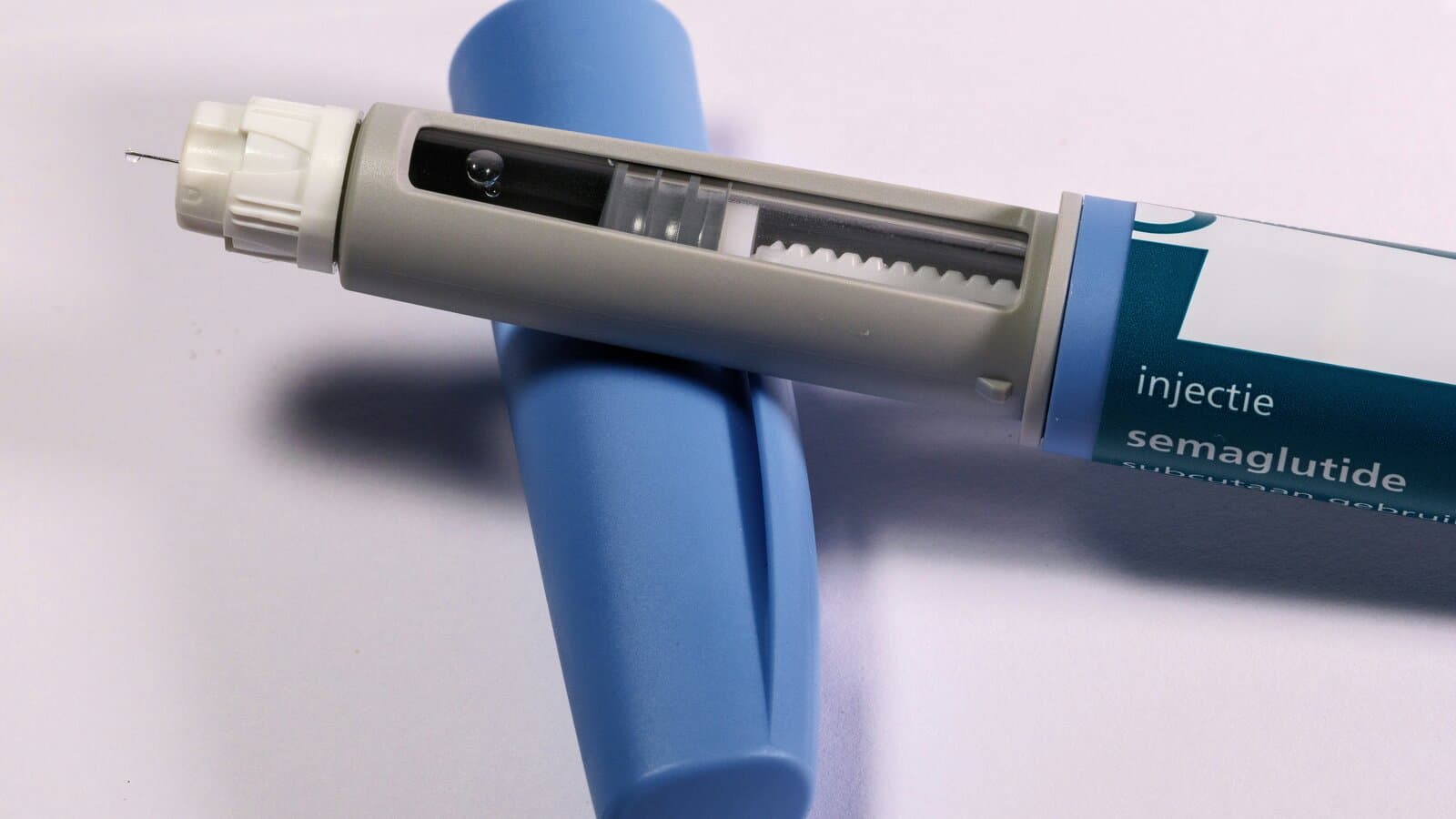
The compounding pharmacy crackdown is the real recall story
Brand-name GLP-1 drugs from Novo Nordisk and Eli Lilly have not been recalled. The recall wave hitting GLP-1 products in 2025-2026 targets compounding pharmacies that made copycat versions of semaglutide and tirzepatide during the drug shortage.
The FDA first removed tirzepatide from its shortage list in October 2024, then reissued its determination on December 19, 2024 after a legal challenge. Semaglutide followed on February 21, 2025. After those dates, compounders lost their legal basis to produce copies under Section 503A of the Federal Food, Drug, and Cosmetic Act. The enforcement actions followed.
TL;DR
- Brand Ozempic, Mounjaro, and Zepbound have not been recalled (Wegovy had one minor Class II lot recall in December 2025, never reached patients)
- The FDA inspected 38 compounders and issued 21 warning letters in March 2026
- Lab tests found compounded semaglutide potency ranging from 62% to 143% of labeled dose
- Counterfeit Ozempic pens seized in April and December 2025
- Tirzepatide left the shortage list December 2024; semaglutide followed February 2025
- Patients on compounded GLP-1s should transition to FDA-approved versions
How we tracked these recalls
We queried the openFDA drug enforcement endpoint for all recalls mentioning semaglutide, tirzepatide, or GLP-1 in the product description, filtered to report dates from January 2025 through August 2026. We cross-referenced these with the MyfitByte drug identity system to link recalls to our canonical drug records. FDA warning letters and shortage list changes were pulled from FDA.gov directly.
Why compounders started making GLP-1 drugs
A shortage created the legal opening. Under FDA rules, compounding pharmacies can produce copies of brand-name drugs when those drugs appear on the FDA Drug Shortage List. When demand for Ozempic and Mounjaro exploded in 2022-2023, both landed on that list.
Compounders filled the gap. By mid-2024, an estimated 500+ pharmacies and telehealth platforms offered compounded semaglutide or tirzepatide at prices 70-90% below brand. The economics were obvious: a month of compounded semaglutide cost $150-300, versus $900+ for brand Ozempic without insurance.
The market grew fast. Telehealth startups built entire business models around prescribing compounded GLP-1 injections. Some offered monthly subscriptions at $199/month including the drug, consultations, and shipping. Patients who could not afford brand pricing or whose insurance denied coverage for weight loss indications turned to compounders by the millions.
The problem: compounded drugs do not undergo the same manufacturing controls, purity testing, or FDA oversight as approved products. A compounder operating under 503A (individual prescriptions) faces state board oversight but not FDA pre-market review. A 503B outsourcing facility gets more FDA scrutiny, but still far less than a full NDA holder like Novo Nordisk.
At its peak, compounded semaglutide represented about 15% of US GLP-1 prescriptions, roughly 2.5 million prescriptions in 2025 alone.
Timeline of FDA actions
| Date | Action | Target |
|---|---|---|
| Oct 2024 | Tirzepatide first removed from shortage list | All tirzepatide compounders |
| Dec 19, 2024 | FDA reissues tirzepatide shortage determination after court remand | Tirzepatide compounders (60-90 day grace period begins) |
| Feb 18, 2025 | Grace period ends for 503A pharmacies (tirzepatide) | State-licensed compounders |
| Feb 21, 2025 | Semaglutide removed from shortage list | All semaglutide compounders |
| Mar 5, 2025 | Texas court denies OFA preliminary injunction (OFA v. FDA) | Outsourcing Facilities Association |
| Mar 10, 2025 | FDA confirms enforcement discretion ended for 503A tirzepatide | All remaining tirzepatide compounders |
| Apr 2025 | Counterfeit Ozempic seized in US supply chain (lot PAR0362) | Unauthorized distributors |
| Oct 2025 - Feb 2026 | FDA inspects 38 compounding pharmacies across 14 states | Compounders still producing GLP-1s |
| Mar 7, 2026 | FDA issues 21 warning letters to compounders | Non-compliant pharmacies |
| Dec 2025 | Wegovy recall (hair found in prefilled syringe, Class II) | Novo Nordisk lots RZFYK06, RZFYA53 |
What triggered the recalls
The recalls fall into three categories, each reflecting a different manufacturing failure.
Sterility failures
Injectable drugs must be sterile. Period. Of the 21 compounders that received warning letters in March 2026, twelve had sterility violations. Three of those showed confirmed bacterial contamination in finished vials. The FDA found issues during inspections including:
- Inadequate environmental monitoring in compounding areas
- Failed media fill tests (simulations that check whether the process produces sterile products)
- Lack of endotoxin testing on finished vials
- Confirmed bacterial growth in finished product samples
For an injectable that patients self-administer weekly, a sterility failure is serious. Contaminated injections can cause infections ranging from localized abscesses to life-threatening sepsis.
Potency and dosing problems
GLP-1 drugs require precise dosing. Semaglutide is administered in microgram quantities (0.25mg to 2.4mg). Lab testing during the FDA's inspection sweep found actual semaglutide content ranging from 62% to 143% of labeled dose. Sixteen of 21 warned pharmacies had potency failures. Some compounded products showed:
- Sub-potent formulations (as low as 62% of labeled active ingredient)
- Super-potent vials (up to 143% of labeled dose, risking severe GI side effects)
- Inconsistent fill volumes across batches
A patient expecting 1mg per dose who receives 2mg will experience amplified side effects: severe nausea, vomiting, and potential pancreatitis risk.
Salt form issues
This is the technical argument that generated the most legal controversy. Novo Nordisk and Eli Lilly argued that compounders using semaglutide sodium or tirzepatide sodium (salt forms) were not making the "same" drug as the approved products, which use the base form. The FDA sided with the manufacturers.
Compounders pushing back on this distinction argue the salt form converts to the same active molecule in the body. The FDA disagreed, stating the finished product must be "essentially a copy" of the approved drug.
Recall classifications for GLP-1 products
Most GLP-1 recalls in 2025-2026 are Class II, meaning the products may cause temporary or reversible health problems. A few reached Class I territory where sterility concerns posed risk of serious infection.
| Classification | Count (2025-2026) | Typical Reason |
|---|---|---|
| Class I | 3-5 | Sterility failure in injectables |
| Class II | 15-20+ | Potency issues, cGMP violations |
| Class III | ~5 | Labeling deficiencies |
These numbers cover semaglutide and tirzepatide compounded products specifically, queried from the openFDA enforcement endpoint.
How to check if your GLP-1 product was recalled
The openFDA enforcement API lets you search for recalls by product description:
curl "https://api.fda.gov/drug/enforcement.json?search=product_description:\"semaglutide\"+AND+report_date:[20250101+TO+20261231]&limit=50"
Check the response for:
recall_number(the unique identifier)classification(Class I, II, or III)recalling_firm(who issued the recall)distribution_pattern(where the product was sold)status(Ongoing, Terminated, or Completed)
You can also search by company name if you know your compounder:
curl "https://api.fda.gov/drug/enforcement.json?search=recalling_firm:\"pharmacy+name\"+AND+openfda.generic_name:\"semaglutide\"&limit=10"
Brand-name GLP-1 safety record
For context, the FDA-approved GLP-1 products from Novo Nordisk and Eli Lilly have a different recall profile. Their recalls (when they happen) tend to involve manufacturing or packaging issues, not drug quality problems:
- Pen device malfunctions (needle not retracting properly)
- Label mix-ups between dose strengths (0.25mg vs 0.5mg pens)
- Foreign particulate matter in individual lots
- Cold chain documentation gaps during shipping
These are standard manufacturing quality events that happen across the pharmaceutical industry. They do not reflect safety concerns with the drug itself.
The most notable recent brand recall: Novo Nordisk voluntarily recalled specific lots of Wegovy prefilled syringes on December 19, 2025, after a routine inspection found hair in a prefilled syringe. Recall number D-0245-2026, classified as Class II on December 31, 2025. Affected lots: RZFYK06 and RZFYA53 (1 mg/0.5 mL pens, NDC 0169-4501-14). Novo Nordisk stated the affected units "were never sent to patients or retailers," and no patient action was needed.
The distinction matters: brand recalls fix isolated manufacturing glitches. Compounder recalls reveal systemic quality control gaps in how the drug was made.
Counterfeit GLP-1 products: a separate problem
Beyond compounders, outright counterfeit Ozempic pens have entered the US supply chain. This is a different problem: not a pharmacy making a copy under a legal exemption, but criminals replicating packaging with unknown substances inside.
The FDA issued alerts in April 2025 and December 2025 after seizing counterfeit Ozempic units. Key identifiers from the FDA:
- April 2025 seizure: Several hundred units with lot number PAR0362 (an authentic Novo Nordisk lot number reused on fakes), illegitimate serial number prefix 51746517
- December 2025 seizure: Dozens of units with lot PAR1229, plus reappearance of PAR0362 and NAR0074 from earlier 2023-2024 investigations
How to spot counterfeits: on authentic pens, the EXP/LOT text appears above the expiration date and lot number. On known counterfeits, it appears to the left. When in doubt, verify with your pharmacy or Novo Nordisk directly.
In one earlier incident (June 2023), a counterfeit pen at a retail pharmacy contained insulin glargine instead of semaglutide, causing a patient adverse reaction. These are not theoretical risks.
What patients should do
If you are taking a compounded GLP-1 product:
- Check the recall list. Search the FDA recall database or the openFDA enforcement API for your pharmacy's name.
- Talk to your prescriber. Discuss transitioning to an FDA-approved version now that shortages have resolved.
- Do not stop abruptly. GLP-1 drugs should be tapered, not stopped cold. Rebound hunger and blood sugar spikes can occur.
- Report problems. File adverse events through FDA MedWatch if you experienced issues with a compounded product.
The legal battles continue
Several compounding pharmacy associations challenged the FDA's shortage resolution decisions in court. The argument: patient access should not be cut off when brand supply remains inconsistent in some regions.
Courts have issued mixed rulings. Some compounders received temporary restraining orders allowing continued production while cases proceed. Others were forced to stop immediately.
The Outsourcing Facilities Association (OFA) filed suit against FDA in the Southern District of Texas (Case No. 4:25-cv-00893). A federal judge issued a preliminary injunction in October 2025 allowing certain 503B facilities to continue production while the case proceeded. But on March 5, 2025, the Northern District of Texas denied OFA's broader preliminary injunction motion.
Key legal questions still unresolved:
- What does "shortage resolved" mean? (Does nationwide availability mean every zip code can fill a prescription within 48 hours?)
- Is the salt-form distinction scientifically arbitrary?
- Can the FDA enforce within 60-90 days when compounders invested millions in capacity?
Four pharmacies were referred to the DOJ for potential criminal charges related to alleged falsification of quality control records. Three others voluntarily ceased operations after receiving warning letters.
The underlying tension is real. Brand GLP-1 drugs remain expensive ($900-1,300/month without insurance), and insurance coverage is inconsistent, particularly for weight loss indications. Gross Medicare Part D spending on GLP-1 drugs hit $27.5 billion in 2024 across 21.8 million claims, according to KFF analysis of CMS data. About 1 in 8 US adults (12%) reported taking a GLP-1 drug as of November 2025, per KFF's Health Tracking Poll. The compounding market existed because the access problem existed.
Whether enforcement resolves the safety concerns without creating an access crisis remains an open question heading into late 2026.
FAQ
Has Ozempic been recalled? No. Brand-name Ozempic from Novo Nordisk has not been recalled for drug quality issues. The 2025-2026 recall wave targets compounding pharmacies that made unauthorized copies.
Are compounded GLP-1 drugs illegal now? After the FDA resolved the semaglutide and tirzepatide shortages, compounders lost their 503A exemption to produce copies. Continuing production without this exemption violates federal law.
What is a Class II recall? A Class II recall means the product may cause temporary or reversible health problems, or that the probability of serious harm is remote. Most compounded GLP-1 recalls fall here.
Can I still get compounded semaglutide? Some compounders continue operating under court injunctions while legal challenges proceed. The FDA considers these products unapproved drugs.
How do I know if my pharmacy's product was affected? Search the openFDA enforcement database by firm name, or ask your pharmacy directly. Reputable compounders will proactively notify patients about recalls.
What is the difference between semaglutide base and semaglutide sodium? The base form is what Novo Nordisk uses in Ozempic/Wegovy. The sodium salt form is what many compounders used. The FDA ruled these are not interchangeable copies, which removed the legal basis for compounding.
Will GLP-1 drugs go back on the shortage list? Possible but unlikely in 2026. Both Novo Nordisk and Eli Lilly expanded manufacturing capacity significantly. The FDA monitors supply monthly.
Are compounded GLP-1s dangerous? Not inherently, but they lack the manufacturing controls of approved products. The recalls show that some compounders had real quality problems (sterility failures, wrong potency). Others produced acceptable products. The risk is that patients cannot verify which category their product falls into.
How many people were taking compounded GLP-1 drugs? Exact numbers do not exist because compounding pharmacies are not required to report dispensing volumes to the FDA. Overall, about 12% of US adults (roughly 1 in 8) reported taking a GLP-1 drug as of November 2025, per the KFF Health Tracking Poll. The compounded share of that market was estimated at 15% of total GLP-1 prescriptions.
What happens to my weight if I stop my compounded GLP-1? Clinical data on branded GLP-1 drugs shows patients regain approximately two-thirds of lost weight within one year of discontinuation. Abrupt cessation is not recommended. Work with your prescriber on a transition plan to either a brand product or a structured taper.
Data sourced from the openFDA drug enforcement API, FDA Drug Shortage Database, KFF Medicare Part D spending analysis (Jan 2026), and KFF Health Tracking Poll (Nov 2025). Last verified August 2026.
Want this data delivered programmatically? The MyfitByte API tracks FDA recalls, adverse events, and drug safety data across all US-approved medications. Check our openFDA API guide and drug recall classes explainer for more context.
Related reading
- Compounded Semaglutide: Safety Risks the FDA Found — potency testing results, sterility failures, and what patients should do
- Does Insurance Cover Wegovy & Zepbound in 2026? — coverage options for transitioning off compounded
- How Many Americans Take GLP-1 Drugs? — 15 million users and counting
- Ozempic Side Effects: What 69,000 FDA Reports Show — adverse event data from FAERS
Published on 2026-08-17 · 12 min read
← Back to all articles